“애무와 스침” Caress and Graze
2021.09.01.-2021.09.27
Finepaper gallery, Seoul
“아름다움이란, 칠기의 덮개를 제거하고 국그릇을 입으로 올려 가져가는 사이에, 깊고 어두운 그릇에 담긴 정적이고 고요한 액체를 보았을 때, 칠기와 구분되지 않는 국의 색깔을 볼 때, 그 순간에 있다, 칠기의 어둠 속에 무엇이 있는지 우리는 구분할 수 없다. 하지만 손바닥은 느낄 수 있다, 국의 부드러운 일렁임과, 그릇 가장자리에서 방울지며 올라오는 김, 그리고 섬세한 기대를 하게 만드는 향기를…신비한 순간, 이는 거의 황홀한 순간이라고까지 말할 수 있다” (유하니 팔라스마, 건축과 감각. 87p). 이 글에는 일상의 단순한 행위 속에서 아름다움을 느끼는 추상적 감각에 대해 기술하고 있다. 우리는 익숙한 사물들 속에서도 아름다움을 감각할 수 있다. 다만 그것을 온전히 느끼기 위해서는 쓸모나 기능 혹은 의미로부터 자유로워져 순간에 몰입할 수 있어야만 가능한 것이다. 국그릇을 입으로 올려 가져가는 사이의 단 몇 초 동안 신비하고 황홀한 순간을 느꼈던 다니자키 준이치로처럼 말이다. 그것이 가능하다면 우리의 삶은 비참한 현실의 자각보다, 일상의 소박한 풍요로움과 미학적 경험들로 가득해질 수 있다.
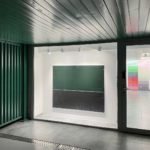
화인페이퍼 갤러리는 오는 9월 1일부터 9월 27일까지 “애무와 스침”를 개최한다. 본 전시는 강은혜, 김혜숙, 양상근, 이경 네 명의 참여 작가들이 전시공간을 자율적으로 해석하면서 서로의 작품을 구성할 수 있는지를 실험하는 기획이다. 이러한 과정을 위해서는 작가들이 전시장 공간을 감각하고, 서로의 작품에 대해 인식하고 조율하는 호흡이 매우 중요하다. “애무와 스침”의 전시장소인 화인페이퍼 갤러리는 다소 낮은 천장에 건축적으로 매우 독특하게 분할되어있는 화이트큐브로서, 해석하기가 까다로운 공간이다. 놀랍게도 전시공간에서 처음 만난 작가들은 본능적으로 갤러리 공간과 서로의 작품에 대해 이해를 했고, 함께 구성할 작품들을 선정하였다. “애무와 스침”이라는 전시제목은 네 명의 작가들이 서로의 작품을 “텍스트나 의미의 차원”이 아니라, “감각의 차원”으로 접근하고, 조율하며 하나의 전시로 완성해가는 과정을 뜻한다. 이것은 매우 에로틱하고 고양된 감각의 상태에서만 가능한 창작과정이다. 작가들이 서로의 작품들을 함께 섞으면서도 적절히 거리를 유지하는 과정은 직관적인 판단에 의거하는 것이며, 이는 마치 오케스트라가 협주를 할 때 자신이 연주하는 악기뿐만 아니라 타인의 소리에 귀를 기울이며 하나의 아름다운 곡을 완성하는 과정과도 같다. 칸딘스키가 음악을 듣고 그 감흥을 회화적 구성으로 표현한 후 Composition 이라고 제목 붙였다면, “애무와 스침”은 순수미술의 전통장르인 한국화, 서양화, 설치미술, 전통조각을 하는 다양한 연령대의 작가들이 “화인페이퍼 갤러리”라는 독특한 건축적 공간 안에서 조형요소들의 composition을 통해 함께 음악적 풍경을 공감각적인 전시로 완성하는 실험이라고 볼 수 있겠다.
장 클레 마르탱은 “애무와 스치기는 현실과 촉각 형태들을 초감각적으로 탐사하는 방식들로 유도한다”고 말한다. 애무와 스치기는 육체적 감각을 넘어선 추상적이고 비물질적인 상태의 예민함이며, 피부의 솜털과 고양이 콧수염이 감각하는 세계, 그리고 눈으로 볼 수는 없지만 공간을 가로질러 전달되는 체온의 존재와도 같은 것이다. “손은 보기를 원하고, 눈은 애무를 원한다”는 괴테의 말이나, “댄서는 발가락에 귀가 있다”는 니체의 말과 같이, 예술가들은 창작과정에 중에 여러 감각이 관여하는 경험을 한다. 건축적 공간에 선을 통해 기하학적으로 개입하는 설치미술로 잘 알려져 있는 강은혜 작가의 작품은 보여지는 장소, 시간, 빛의 상태, 주변 환경에 따라 끊임없이 변화하고 해석의 관점이 달라지기에 결코 단순하게 언어로 규정할 수 없다. “일렁거림”, “검은 망사스타킹과 같은 흐릿함” “정지해있으나 움직이는 것과 같은 착시효과” “공간을 관통하지만 동시에 공간을 가리는 베일로서의 벽” 이러한 표현들은 본인이 강은혜 작가의 작품을 본 느낌이다. 조금 더 과감하게 본인의 주관적인 감상을 표현하자면 “정숙하고 단아한 기하학 속에서 발견하는 예술작품의 요염한 매력”이다. 이번 전시에서 강은혜 작가는 회화와 조각이 화인페이퍼 갤러리 공간 안에서 공명할 수 있도록 공간과 공간을 연결시켰다. 마치 악기의 현이나 악보의 오선지와 같은 얇은 선들은 공간을 가로지르며 아슬아슬하게 다른 작품들에 개입한다. 또한 관람객이 작품을 감상하며 자연스럽게 허리를 굽히거나 발걸음의 속도를 조율함으로서 공간의 음률을 몸으로 감각하게 한다. 김혜숙 작가는 특정 지역의 장소성과 건축물에서 가져온 모티브를 기하학적 추상으로 표현하는 작가인데, 강은혜 작가의 작품이 “현재”의 시간과 관련한다면, 김혜숙 작가의 작품은 마치 “과거와 미래 사이 어디에선가 경험했을 것 같은 기이한 기억의 잔상” 혹은 “시공간을 초월한 데자뷰 현상”을 연상하게 한다. 김혜숙 작가의 작품이 기하학적 순수추상 혹은 건축적 구조의 재현적 이미지를 응용한 추상에 가까움에도 불구하고, 그녀 특유의 촉각적이고 후각적인 감각은 작품을 감상하고 바라보는 것만으로도 “눈으로 애무하고, 공기를 관통하여 스치는 것”같은 느낌을 맛보게 한다. 그녀의 회화가 그러한 독특한 감각을 전달하는 중요한 이유 중 하나가 작가가 선택하는 매체의 속성 때문일 수도 있다는 것이 필자의 견해인데, 전통 한국화 매체인 장지가 주는 촉각적 감각, 차갑고 예리한 샤프펜슬, 따뜻하게 번지는 먹의 매체가 기하학적 추상과 만나 김혜숙 작가 특유의 기묘한 조형세계를 보여주는 것 같다. 회화의 본질적 요소인 “색”에 집중하는 이 경 작가는 “형용사로서의 색채목록”이라는 표현을 쓰고 있다. 2012년부터 최근까지 지속해온 그녀의 “형용사로서의 색채 목록”을 읽고 있노라면, 결코 설명할 수 없는 인상과 감흥에 대해 리스트를 만들어놓은, Text로 이루어진 개념미술이 연상되기도 한다. 색이란 직접적이고 구체적으로 다가오는 시각적 요소이지만, 형태와는 달리 매우 추상적인 것으로서, 공인된 색채의 명칭을 갖고 있지 않다면 우리는 더듬대며 조심스럽게 비유를 들어가며 색의 느낌을 묘사할 수 밖에 없을 것이다. “푸른”이라는 단어와 “푸르스름한”이라는 단어는 유사하나 분명 다른 감각적 차원을 설명한다. 이 경 작가는 그러한 미묘한 색의 차이나 변화도 놓치지 않고 색의 본질을 탐구하는 작가이다. 순수조형요소를 가지고 작품을 하는 작가들이 대체적으로 미술사 레퍼런스를 기반으로 하여 관념적인 세계를 구축하는 반면, 이경 작가는 본인의 작품에 대해 “감정”이라는 단어를 쓰고, “작가의 주관성”과 “변화하는 실재”에 대한 이야기를 한다. 그러나 이 경 작가의 이러한 솔직하고도 꾸밈없는 작가적 태도를 “내용이 주관적이고 단순하다”고 오해해서는 안된다. 오히려 작가는 색을 바라보는 감각적 예민함을 극한까지 치열하게 끌어올리지 않으면 결코 그 미묘한 사실을 구분하거나 인식할 수 없음을, 또한 그 감각과 인식조차 계속 변화하기에 결코 규정짓고 붙잡아둘 수 없음을 역설적으로 말해주고 있다. 조각가 양상근은 자연재료인 흙을 주요 매체로 하여 도자와 전통조각을 오랫동안 연구한 장인으로서, 초월적이고 영적인 세계에 대해 작업을 한다. 조각의 원초적인 물질에 대한 감각과 이해가 매우 탁월한 양상근 작가의 조각은 인체라는 구체적인 형상을 갖고 있으나, 형태보다는 물질, 시간, 공간 등의 추상적 감흥을 불러일으킨다. 즉 조각의 공간에 대한 해석과 물질에 대한 감각이 형태를 압도하는 것이다. 흙을 빚어 시멘트로 캐스팅한 작은 조각은 흙과 돌에 대한 물질적 상상력을 불러일으키는데, 이러한 조각의 힘은 텍스트 중심으로 조각을 규정짓고 범주화하는 현대미술의 경향성에서는 찾아보기 쉽지 않은 것이다. 비물질적인 순수색채, 혹은 기하학적 추상 회화와 설치작품들 사이로 놓이는 양상근 작가의 작은 세 점의 인체 조각은 눈의 애무와 공기의 스침들 사이에서 너무나 확고한 물질적 실체를 보여주며, 무한한 공간과 감각의 세계 속에서 단단한 결정을 만들어내는 지구의 중심, 지구의 내핵과도 같은 역할을 한다.
“애무와 스침”은 현대미술의 유행과는 다소 거리를 두고 우직할 정도로 순수미술의 본질적이고도 조형적인 언어에 집중하는 각기 다른 분야의 네 명의 작가들이 함께 함으로서 완성되었다. 바쁘고 정신없는 일상 속에 아름다움이 초감각적으로 스며들어 매 순간들을 예술화하고 미학적 경험으로 가득 채우는 것은 참으로 근사한 일이다. 공간에 아름다운 음악이 흘러나올 때 듣는 이들의 영혼이 고양되는 것처럼, 아름다운 미술작품도 음악과 마찬가지로 우리의 근심걱정을 잊게하고 삶을 아름답고 풍요롭게 가꾸어준다. “애무와 스침” 기획에 흔쾌히 참여해주신 강은혜, 김혜숙, 이경, 양상근 작가님들과, 전시를 후원해주신 화인페이퍼 갤러리에 감사를 표한다.
글: 2021 ©손정은. (작가. 이화여자대학교 조형예술대학 교수)
“Caress and Graze”
2021.09.01.-2021.09.27 Finepaper Gallery, Seoul
“Beauty exists in that moment when you remove the lid from lacquerware and lift the soup bowl to your mouth, when you see the still and quiet liquid contained in the deep, dark bowl, when you see the color of the soup indistinguishable from the lacquerware. In that moment, we cannot distinguish what exists in the darkness of the lacquerware. But the palm can feel the gentle rippling of the soup, the steam rising in droplets from the edge of the bowl, and the fragrance that creates delicate anticipation… This mysterious moment can even be called an almost ecstatic moment” (Juhani Pallasmaa, The Eyes of the Skin, p. 87). This text describes the abstract sense of feeling beauty in simple acts of daily life. We can sense beauty even in familiar objects. However, to fully feel it, one must be free from utility, function, or meaning and be able to immerse oneself in the moment. Like Junichiro Tanizaki, who felt a mysterious and ecstatic moment during the few seconds of lifting a soup bowl to his mouth. If this is possible, our lives can be filled with the humble abundance and aesthetic experiences of daily life rather than the awareness of miserable reality.
Finepaper Gallery presents “Caress and Graze” from September 1 to September 27. This exhibition is a project that experiments with whether four participating artists—Kang Eun-hye, Kim Hye-sook, Yang Sang-geun, and Kyong Lee—can autonomously interpret the exhibition space and compose each other’s works. For this process, it is very important for the artists to sense the exhibition space and breathe in harmony while recognizing and coordinating each other’s works. Finepaper Gallery, the venue for “Caress and Graze,” is a white cube with a rather low ceiling and architecturally very uniquely divided sections, making it a difficult space to interpret. Remarkably, the artists who met for the first time in the exhibition space instinctively understood the gallery space and each other’s works, and selected works to compose together. The exhibition title “Caress and Graze” refers to the process by which four artists approach and coordinate each other’s works not at “the level of text or meaning” but at “the level of sensation,” completing them as one exhibition. This is a creative process possible only in a very erotic and elevated state of sensation. The process by which artists mix each other’s works while maintaining appropriate distance is based on intuitive judgment, much like an orchestra completing one beautiful piece by listening not only to the instrument they play but also to the sounds of others when performing a concerto. If Kandinsky listened to music, expressed that emotion in painterly composition, and titled it “Composition,” “Caress and Graze” can be seen as an experiment in which artists of various ages working in traditional genres of fine art—Korean painting, Western painting, installation art, and traditional sculpture—complete a synesthetic exhibition of musical landscape through the composition of formative elements in the unique architectural space called “Finepaper Gallery.”
Jean-Luc Nancy says, “Caressing and grazing lead to ways of exploring reality and tactile forms in a supersensory manner.” Caressing and grazing are the sensitivity of an abstract and immaterial state beyond physical sensation, the world sensed by skin down and cat whiskers, and like the existence of body temperature that cannot be seen with the eyes but is transmitted across space. Like Goethe’s words that “the hand wants to see, and the eye wants to caress,” or Nietzsche’s words that “the dancer has ears in her toes,” artists experience the involvement of multiple senses during the creative process. Artist Kang Eun-hye’s work, well known for installation art that geometrically intervenes in architectural space through lines, constantly changes according to the place shown, time, state of light, and surrounding environment, and the perspective of interpretation varies, so it can never be simply defined in language. “Rippling,” “blurriness like black mesh stockings,” “optical illusion as if stationary but moving,” “a wall as a veil that penetrates space but simultaneously conceals space”—these expressions are my feelings upon seeing Kang Eun-hye’s work. To express my subjective appreciation more boldly, it is “the seductive charm of artwork discovered within chaste and elegant geometry.” In this exhibition, Kang Eun-hye connected space to space so that painting and sculpture could resonate within the Finepaper Gallery space. Like the strings of an instrument or the staff of sheet music, thin lines precariously intervene in other works while crossing space. Also, viewers naturally bend at the waist or adjust the speed of their steps while appreciating the work, sensing the rhythm of space with their bodies. Artist Kim Hye-sook expresses motifs taken from the sense of place and architecture of specific regions in geometric abstraction. If Kang Eun-hye’s work relates to “present” time, Kim Hye-sook’s work evokes “the strange afterimage of memory as if experienced somewhere between past and future” or “déjà vu phenomenon transcending time and space.” Despite Kim Hye-sook’s work being close to geometric pure abstraction or abstraction applying representational images of architectural structure, her distinctive tactile and olfactory senses make one taste a feeling like “caressing with the eyes and grazing through the air” just by viewing and looking at the work. One of the important reasons her painting conveys such a unique sensation may be due to the properties of the media the artist chooses, in this writer’s opinion. The tactile sensation provided by Jangji, a traditional Korean painting medium, the cold and sharp mechanical pencil, and the warmly spreading ink medium meet geometric abstraction to show Kim Hye-sook’s peculiar formative world. Artist Kyong Lee, who focuses on “color,” an essential element of painting, uses the expression “color list as adjective.” Reading her “color list as adjective” that she has continued from 2012 to the present evokes conceptual art made of text, like a list of impressions and emotions that can never be explained. Although color is a visual element that approaches us directly and concretely, unlike form, it is very abstract, and if we don’t have officially recognized color names, we can only fumble and carefully describe the feeling of color through metaphor. The words “blue” and “bluish” are similar but clearly describe different sensory dimensions. Kyong Lee is an artist who explores the essence of color without missing even such subtle color differences or changes. While artists working with pure formative elements generally construct an ideational world based on art historical references, Kyong Lee uses the word “emotion” about her work and talks about “the artist’s subjectivity” and “changing reality.” However, Kyong Lee’s honest and unadorned artistic attitude should not be misunderstood as “the content being subjective and simple.” Rather, the artist paradoxically tells us that one cannot distinguish or recognize those subtle facts unless one fiercely elevates sensory sensitivity toward color to the extreme, and that even those sensations and recognitions continue to change, so they can never be defined and held onto. Sculptor Yang Sang-geun, as a craftsman who has long studied ceramics and traditional sculpture using earth as the primary medium, works on transcendent and spiritual worlds. Yang Sang-geun’s sculpture, which has an excellent sense and understanding of the primordial material of sculpture, has the concrete form of the human body, but evokes abstract emotions such as material, time, and space rather than form. In other words, the interpretation of sculptural space and the sense of material overwhelm form. Small sculptures cast in cement from molded earth evoke material imagination about earth and stone, and this power of sculpture is not easy to find in the tendency of contemporary art to define and categorize sculpture text-centrally. Yang Sang-geun’s three small human body sculptures placed among immaterial pure colors or geometric abstract paintings and installation works show such a firm material substance between the caress of the eye and the graze of air, playing a role like the center of the earth, the inner core of the earth, creating solid crystals in a world of infinite space and sensation.
“Caress and Graze” was completed by four artists from different fields who distance themselves somewhat from contemporary art trends and focus stubbornly on the essential and formative language of fine art. It is truly wonderful that beauty permeates daily life in a supersensory way amid busy and hectic routines, aestheticizing every moment and filling it with aesthetic experience. Just as listeners’ souls are elevated when beautiful music flows through space, beautiful artworks, like music, make us forget our worries and cultivate life beautifully and abundantly. I express gratitude to artists Kang Eun-hye, Kim Hye-sook, Kyong Lee, and Yang Sang-geun for readily participating in the “Caress and Graze” project, and to Finepaper Gallery for sponsoring the exhibition.
Text: 2021 ©Son Jung-eun (Artist, Professor, College of Art and Design, Ewha Womans University)
Related Exhibition