
Art in Culture 2011. 11월호/ 포커스
이경 9. 28~10. 17 갤러리 아트사간/ 박기진 9. 28~10. 24 공간화랑
이경의 회화와 박기진의 설치작품은 예술사적 문맥보다는 자연에 대한 깊은 탐구의 결과물이다. 이들에게 자연은 예술의 영원한 보고이며, 작품의 내용뿐 아니라 형식의 갱신을 위한 원천이다. 그들의 작품 외관은 매우 단출해 보이지만, 그 내부에는 복잡하게 접힌 굴곡 면과 정교한 메커니즘을 공통적으로 담고 있다. 마주한 색면 또는 기계적 단면들은 끝없는 연쇄 망을 이루며 통과시킨다. 이경의 개인전에는 떼어낸 테이프 가장자리로 미세하게 쌓인 면과 면, 색과 색, 형과 형 사이를 구분 짓는 물감의 가느다란 층이 있다. 그리고 박기진의 전시에는 여러 크기의 통과 관이 결합되어 작동되는 기계들이 있다. 이 두 전시는 연속성의조건으로 ‘불연속성’에 주목한다. 연속과 불연속성, 더 나아가 필연과 우연의 관계는 예술뿐 아니라, 고대 자연철학으로부터 시작된 오랜 화두였다.
가능한 색의 수평
장 살렘은 [고대 원자론]에서 고대 원자론자들은 존재가 본질적으로 ‘불연속’이라는 사실을 공표함으로서 경험적 외양들, 무엇보다도 운동을 이해할 수 있다고 지적한다. 한편 반대자들은 ‘전체는 하나이며 영원하고 흔들림이 없으며, 완결된 것’(파르메니데스)이라고 가르쳤다. 반대자들은 운동이 그저 환영에 불과하다고 본다. 장 살렘은 섭리를 통하여 연속성과 필연성을 주장하는관념론에, 불연속성과 우연성을 주장하는 유물론을 대조시킨다. 그의 분류에 의하면 현대 과학 역시 공유하는 고대 원자론자들의 가설은 유물론적이다. 그들에게 원자들의 운동은 그것을 결정하는 어떤 외부의 강제력, 즉 필연의 결과물이 아니다. 원자론자들의 필연 개념은 관념론처럼 기원과 최후의 목적을 가정하지 않는다. 우주에서 벌어지는 생성과 소멸은 이미 있어 왔고, 영원히 있을 것이다. 이경과 박기진이 출발하는 하늘이나 물 역시, 그것이 시작되고 끝나는 지점은 불확실하다. 하지만 자연이든예술이든 불연속적 흐름을 이어 가려는 노력은 계속된다.
화가인 이경은 다양한 계열로 펼쳐지는 색의 띠로 일련의 풍경을 암시한다. 비재현적인 화면에서 풍경을 떠올리게 되는 것은 수평선이나 지평선을 떠오르게 하는 ‘수평면’ 때문이다. 다양한 두께의 테이프를 동원하여 그어진 수평면을 채우는 색상 역시, 하늘이나 바다 같이 끊임없이 변화하는 광대한 자연의 캔버스를 연상시킨다. 작품 제목에는 ‘풍경’과 ‘그림’이라는 단어가 같이 등장한다. 작가 말대로 ‘그림은 현실을 담고 있지만, 실재하지 않는 공간, 색, 깊이로 표현된다.’ 그것은 ‘가능한 색의 수평’(전시부제)을 만든다.
풍경과 그림을 동시적으로 매개하는 것은 언어이다. 그러나 미묘한 색의 계열로 이루어진 그 언어는 ‘언어 밖의 언어’이다. 공간은 시간의 흐름을 따라 주욱 쌓여 가고, 시간은 켜켜이 쌓인 지층처럼 공간화된다. 먼저 칠해진 색은 그 다음 색을 부르고, 형태는 미리 정해진 것이 아니라 색의 전이로 귀결된다. 이전 작품에서는 점진적으로 쌓이는 수평적 색의 띠가 주를 이루었지만, 이번 전시에서는 변화무쌍한 형태의 변주가 주가 된다. 캔버스에 아크릴 물감으로 그려진 작품들은 (mistylandscape_) 시리즈만수평의 색 띠로 되어 있으며, (picture_) 시리즈는 하나의 단위를 이루는 층 내부에도 색과 형태의 전이가 일어난다. 테이프를이용하지 않고 자유롭게 죽죽 선으로 그은 작은 작품들도 걸려 있다. 이전 작품은 부드럽고 잔잔했지만, 이번 작품은 대립과 충돌을 싸안으면서 자연의 조화보다는 역동성에 강조점을 둔다. 자연에서 벌어지는 모종의 사건에 의해 안정된 구조는 파문을 일으키며 변동한다.
수평을 이루는 기계들
박기진의 전시 역시 물과 같은 자연의 유동적 요소를 다룬다. 이경의 경우 수평의 색면이라는 규칙이 관철된다면, 박기진은 자신의 상상을 정교한 장치로 구체화한다. 허구는 3차원 공간 속에서 원래부터 그런 것이 있었다는 듯이 당당하게 서 있다. 깃털같이 가벼운 허구는 육중한 물체로 구현되어 지상에 한 자리를 차지하는 것이다. 이 맥락에서 보자면 전시장 안의 이상한 기계들은 발명이 아니라, ‘발견’(전시 부제)된 것이다. 대서양 저편의 친구와 통화하던 중 작가는 둘 사이가 물로 연결되어 있음을 자각하고, 일련의 순환 장치를 통해 만물이 연결되어 있다는 고대의 자연 철학을 구현한다. 거대한 호수는 이러한 연결망에서 분리된 물을 상징하며, 작가는 아프리카의 두 호수를 연결시키겠다는 발상을 이어 간다.
전시장 입구에 들어가자마자 보이는 거대한 물구덩이는 두 호수의 연결관 단면에 해당된다. 거대한 터널을 채우는 출렁거리는물의 영상은 관객을 빨아들일 듯 몰입시킨다. 지하층에서 보면 낡은 금속관만 보인다. 전체로 조망되는 예술작품이기보다는, 실제 공간에 설치되어 작동 중인 사물의 면모를 강조한 것이다. 분리된 두 호수에는 서로 다른 모양새의 물고기가 서식하는데, 원래는 한 종이었다가 각각 진화하여 분화되었다. 작가는 이 둘을 만나게 해 주고 싶었고, 또 다른 전시실에 그것이 가능할 법한거대한 부표같은 구조물을 만들었다. 이 기구가 호수에 실제로 띄워진다면, 물거품이 떠오르는 기계 윗부분으로 물고기가 올라가서 주변을 둘러보며 동족을 만날 수 있을 것이다. 부글거리는 거품, 번쩍이는 빛, 간헐적으로 들리는 소리는 기계가 그냥 서있는 것이 아니라 작동 중임을 암시한다.
전시장 벽면에는 그것들이 실현될 수 있는 정보가 매뉴얼처럼 새겨있고, 터널 사이로 빠져 나가는 물의 흐름은 8개의 패널을 수평으로 배치하여 표현한다. 박기진의 작품 역시 이경의 작품처럼 수평 맞추기가 중요하다. 수평이라는 기준 선 위 아래의 자그마한 차이와 간극들이 만물을 흐르게 할 것이기 때문이다. 이러한 기준이 없다면, 흐름은 원초적 혼돈에 머물 것이다. 미끈한 표면만으로 이루어진 전보기기가 지배하는 현대의 시각에서 이 기계는 고대 유물처럼 생겼다. 그것은 형태에서 기능을 유추할 수있는 아날로그형식의 정점에 놓여 있다. 환상적이면서도 부조리해보이기까지 하는 이 기계는 유토피아 또는 디스토피아로 우리를 데려 갈 매개체이다.
자연의 재배치
이경과 박기진의 작품에서 자연의 법칙은 작가가 정한 규칙에 의해 재배치된다. 자연은 공통적 감각뿐 아니라, 이질성의 근원이기도 하다. 그들의 작품은 이전에 없었던 것들이 생기는 경우지만, 대부분 아무것도 아닌 것으로 끝나고 마는 자의성에 머물지않는다. 반대로 거기에는 긴장감 있는 구조들이 가득하다. 이 구조를 통해서 비로소 사건이 일어난다. 또는 활성화된다. 구조주의 인류학자 클로드 레비 스트로스가 [슬픈 열대]에서 말하듯이 자연 사회 문화의 관계에서 임의적인 것은 없다. 예술은 단순히비합리적이고 비논리적인 충동의 산물이 아니라, 원시인들이 그러하듯이 자연적 환경이 제공하는 것을 논리적이고 체계적으로조직화하는 것이다.
매우 절제되고 엄격해 보이는 그들의 그림과 설치는 코드를 추구하는 과학과 달리, 주어진 것을 계열별로 나누고 불연속적 요소를 간과하지 않으면서, 경험된 자료들을 재정리하는 의미론적 체계를 이룬다. 그점에서 그들은 ‘야생적 사고’(레비 스트로스)를한다. 물이나 대기같이 유동적이고 불안정한 요소는 내포적 다양성을 가지는 구조의 유희를 통해 자연과는 다른 스펙트럼으로정연하게 펼쳐진다. 자연을 참조하여 작품으로 구현하는 그들의 작품은 구조적이지만, 그들의 방식은 관념적이지 않다. 물과 대기를 이루는 미립자들의 운동이 이런저런 방식으로 구획되고 흘러가기 위해서는 연속과 불연속의 관계가 중요하다. 자연이든예술이든 합리적 단위로 나뉘어짐은 연속성을 위한 전제 조건이다.
그것은 고대 원자론자들까지 소급될 수 있다. 장 살렘은 [고대 원자론]에서 고대의 자연철학자 루크레티우스를 인용한다. 그는물질 원소들의 쉼 없는 동요를 묘사하면서, 심원한 허공에서 제1물체들에는 어떤 정지도 허락되지 않는다고 말한다. 햇살에 비추어지는 먼지 같은 원자는 기계적 연속성의 운명에서 벗어난 자유로운 운동을 한다. 루크레티우스는 우주는 전체적으로 무한하며 그것의 부분 집합인 물질과 거대한 허공도 역시 무한하다고 본다. 이 무한한 우주 내에서 온갖 종류의 결합과 배치 덕분에원자들은 바로 이 세계를 조성한다.
예술가들은 자연처럼, 결정된 계획이나 섭리 없이 원자들을 저마다 자기 자리에 맞게 정렬시킨다. 자유와 조화를 위해 어떤 선험적인 섭리 같은 것이 전제될 필요는 없다. 섭리가 전제되지 않는 ‘쾌’야말로 예술적인 것이다. 장 살렘은 다소간 기계적으로개념화된 고대 원자론은 자연스럽게 자유사상으로, 그리고 쾌락의 철학으로 이어졌다고 지적한다. 에피쿠로스를 비롯한 쾌락주의자들에 따르면, 감각되지 않는 입자들로 이루어진 이 우주에서 원자론자들은 유한한 이승의 삶 속에서도 강렬하고 지속가능하며, 완벽한 행복에 도달할 수 있다. 쾌락은 방종이 아니라 더 평온하고 더 안정적이며 더 빛나는 것이다. 에피쿠로스는 쾌락의반대편에 절제된 삶을 놓지 않았으며, 그저 쾌락은 잘 이해된 생의 에너지라고 하였다. 쾌락이란 우리가 타고나는 것으로, 모두에게 공통된 성향이다. 이경과 박기진의 작품이 자연에서 끌어내는 것은 이러한 보편성이다.
2011 © 이선영
Harmony of Nature Without Providence
Art in Culture, November 2011 / Focus
Kyong Lee, September 28–October 17, Gallery Art Space
Park Ki-jin, September 28–October 24, Space Gallery
Kyong Lee’s paintings and Park Ki-jin’s installation works are the results of deep inquiry into nature rather than art historical context. For them, nature is an eternal repository of art and a source for renewing not only the content but also the form of their works. Although the external appearance of their works seems very simple, they commonly contain complexly folded curved surfaces and sophisticated mechanisms inside. The color fields or mechanical cross-sections faced form an endless chain network and pass through. In Kyong Lee’s solo exhibition, there are thin layers of paint that distinguish between surfaces and surfaces, colors and colors, forms and forms, finely accumulated at the edges of removed tape. And in Park Ki-jin’s exhibition, there are machines operated by combining pipes of various sizes. These two exhibitions focus on ‘discontinuity’ as a condition of continuity. The relationship between continuity and discontinuity, and furthermore between necessity and chance, has been a long-standing topic not only in art but also starting from ancient natural philosophy.
The Horizontal of Possible Colors Jean Salem points out in [Ancient Atomism] that ancient atomists could understand empirical appearances, above all movement, by announcing that existence is essentially ‘discontinuous.’ On the other hand, opponents taught that ‘the whole is one and eternal and unshaken and complete’ (Parmenides). Opponents see movement as merely illusion. Jean Salem contrasts materialism, which asserts discontinuity and contingency, with idealism, which asserts continuity and necessity through providence. According to his classification, the hypothesis of ancient atomists, which modern science also shares, is materialist. For them, the movement of atoms is not the result of any external coercive force that determines it, that is, necessity. The atomists’ concept of necessity does not assume origin and final purpose like idealism. The generation and destruction occurring in the universe have always been and will be eternal. The sky or water from which Kyong Lee and Park Ki-jin depart also has uncertain points where it begins and ends. However, the effort to continue the discontinuous flow continues, whether in nature or art.
Painter Kyong Lee suggests a series of landscapes through bands of color unfolding in various series. What makes one recall landscape in non-representational screens is the ‘horizontal plane’ that evokes the horizon or skyline. The colors filling the horizontal plane drawn using tape of various thicknesses also evoke the canvas of vast nature that constantly changes, like the sky or sea. In the work titles, the words ‘landscape’ and ‘picture’ appear together. As the artist says, ‘paintings contain reality, but are expressed in non-existent space, color, and depth.’ It creates ‘the horizontal of possible colors’ (exhibition subtitle).
What simultaneously mediates landscape and picture is language. However, that language composed of subtle color series is ‘language outside language.’ Space accumulates along the flow of time, and time is spatialized like stratified layers. The color painted first calls the next color, and form is not predetermined but results from the transition of color. In previous works, horizontal color bands that gradually accumulated were predominant, but in this exhibition, variations of ever-changing forms become dominant. Among works painted with acrylic paint on canvas, only the (mistylandscape_) series consists of horizontal color bands, while in the (picture_) series, transitions of color and form occur even within layers forming a single unit. Small works freely drawn with lines without using tape are also hung. Previous works were soft and calm, but this work embraces confrontation and collision, placing emphasis on dynamism rather than natural harmony. Stable structures fluctuate with ripples due to some event occurring in nature.
Machines Forming Horizontals Park Ki-jin’s exhibition also deals with fluid elements of nature like water. If in Kyong Lee’s case the rule of horizontal color fields is implemented, Park Ki-jin concretizes his imagination into sophisticated devices. Fiction stands proudly in three-dimensional space as if it had been there all along. Fiction as light as a feather is realized as a heavy object, occupying a place on earth. In this context, the strange machines in the exhibition space are not inventions but ‘discoveries’ (exhibition subtitle). While talking to a friend on the other side of the Atlantic, the artist became aware that the two are connected by water, and through a series of circulation devices, embodies the ancient natural philosophy that all things are connected. The great lake symbolizes water separated from this network, and the artist continues the idea of connecting two lakes in Africa.
The huge water pit visible immediately upon entering the exhibition entrance corresponds to the cross-section of the connecting pipe of the two lakes. The image of rippling water filling a huge tunnel immerses viewers as if to suck them in. When viewed from the basement level, only old metal pipes are visible. Rather than being an artwork viewed as a whole, it emphasizes the aspect of objects installed and operating in actual space. Different shaped fish inhabit the two separated lakes; they were originally one species but evolved and differentiated separately. The artist wanted to bring them together and created a structure like a huge buoy in another exhibition room that would make this possible. If this device were actually floated on the lake, fish could rise to the top of the machine where bubbles emerge, look around, and meet their kin. Bubbling foam, flashing light, and intermittent sounds suggest that the machine is not just standing but operating.
Information enabling their realization is inscribed like a manual on the exhibition walls, and the flow of water escaping between tunnels is expressed by horizontally arranging eight panels. In Park Ki-jin’s work, as in Kyong Lee’s, leveling horizontally is important. This is because small differences and gaps above and below the baseline of the horizontal will make all things flow. Without such standards, flow would remain in primordial chaos. From the modern perspective dominated by communication devices made only of sleek surfaces, this machine looks like an ancient relic. It is positioned at the apex of analog form where function can be inferred from form. This machine, which appears both fantastical and even absurd, is a medium that will take us to utopia or dystopia.
Rearrangement of Nature In the works of Kyong Lee and Park Ki-jin, the laws of nature are rearranged according to rules set by the artists. Nature is not only a source of common sense but also of heterogeneity. Their works are cases where things that did not exist before come into being, but they do not remain in arbitrariness that mostly ends up being nothing. On the contrary, they are filled with tense structures. Through these structures, events finally occur. Or are activated. As structuralist anthropologist Claude Lévi-Strauss says in [Tristes Tropiques], there is nothing arbitrary in the relationship between nature, society, and culture. Art is not simply the product of irrational and illogical impulses, but rather, as primitives do, logically and systematically organizing what the natural environment provides.
Their very restrained and strict-looking paintings and installations, unlike science that pursues codes, form a semantic system that reorganizes experienced data while dividing given things by series and not overlooking discontinuous elements. In that respect, they engage in ‘savage thought’ (Lévi-Strauss). Fluid and unstable elements like water or atmosphere unfold orderly in a spectrum different from nature through the play of structures with implicit diversity. Their works that embody nature as reference are structural, but their method is not ideational. For the movement of particles forming water and atmosphere to be demarcated and flow in this or that way, the relationship between continuity and discontinuity is important. Whether in nature or art, division into rational units is a prerequisite for continuity.
This can be traced back to ancient atomists. Jean Salem quotes ancient natural philosopher Lucretius in [Ancient Atomism]. Describing the ceaseless agitation of material elements, he says that in the profound void, no rest is permitted to the first bodies. Atoms like dust illuminated by sunlight make free movements that escape the destiny of mechanical continuity. Lucretius sees the universe as infinite as a whole, and the subsets of matter and vast void are also infinite. Within this infinite universe, thanks to all kinds of combinations and arrangements, atoms create precisely this world.
Like nature, artists align atoms each in their own place without determined plans or providence. No transcendental providence needs to be presupposed for freedom and harmony. Pleasure (‘쾌’) without presupposed providence is precisely what is artistic. Jean Salem points out that ancient atomism, conceptualized somewhat mechanically, naturally led to liberal thought and philosophy of pleasure. According to hedonists including Epicurus, in this universe composed of imperceptible particles, atomists can reach intense, sustainable, and perfect happiness even in finite earthly life. Pleasure is not licentiousness but something more tranquil, more stable, and more radiant. Epicurus did not place a restrained life on the opposite side of pleasure, but simply said pleasure is well-understood life energy. Pleasure is what we are born with, a disposition common to all. What Kyong Lee and Park Ki-jin’s works draw from nature is this universality.
2011 © Lee Sunyoung
Related Exhibition
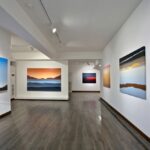 The horizon of possible colors – Solo Exhibition, Art Sagan, 2011