국제 작가 포럼(AFI) 2007 ‘기억의 지속’ 프로그램
조선령(대안공간 풀 객원 큐레이터) 2007년 9월

조선령(대안공간 풀 객원 큐레이터) 2007년 9월
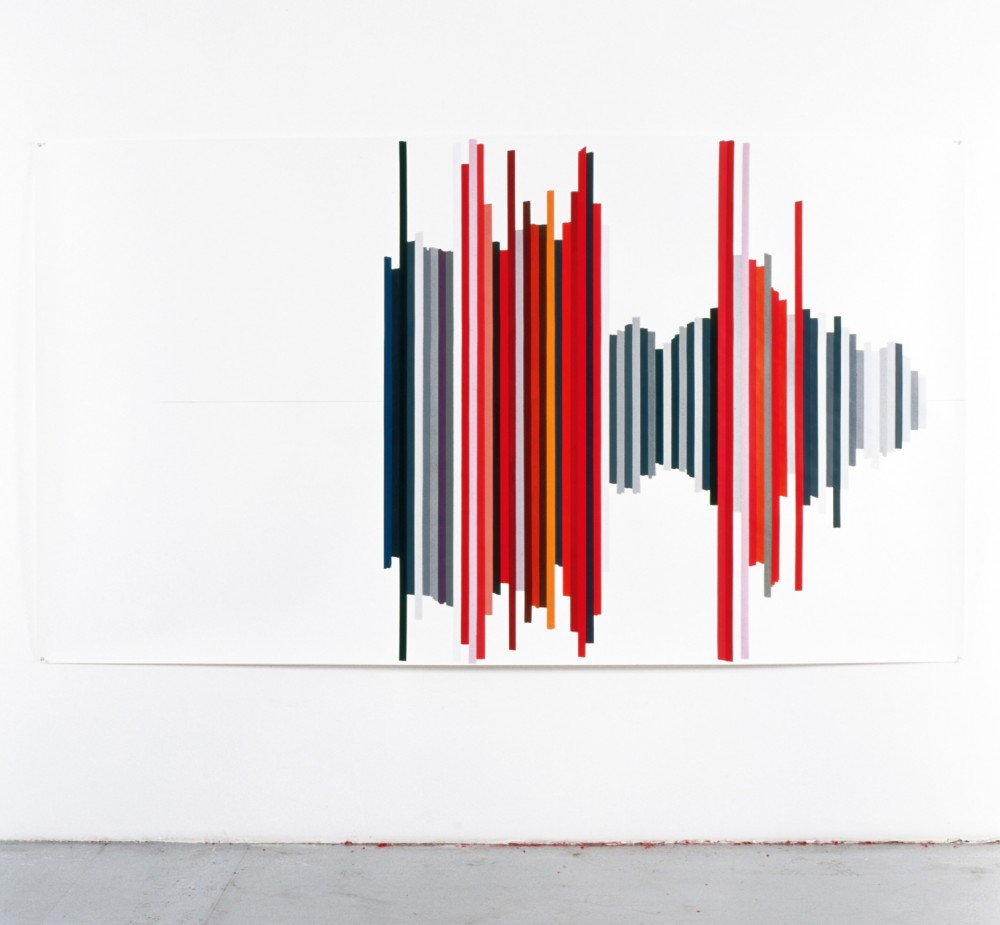
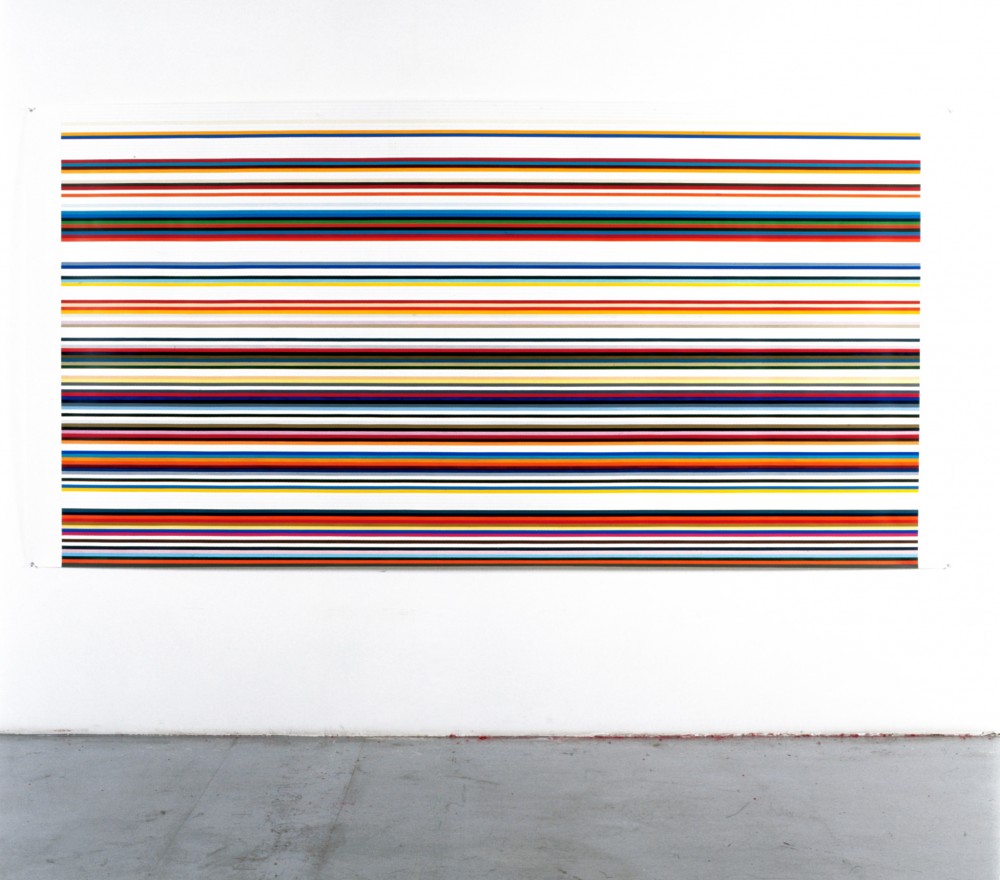
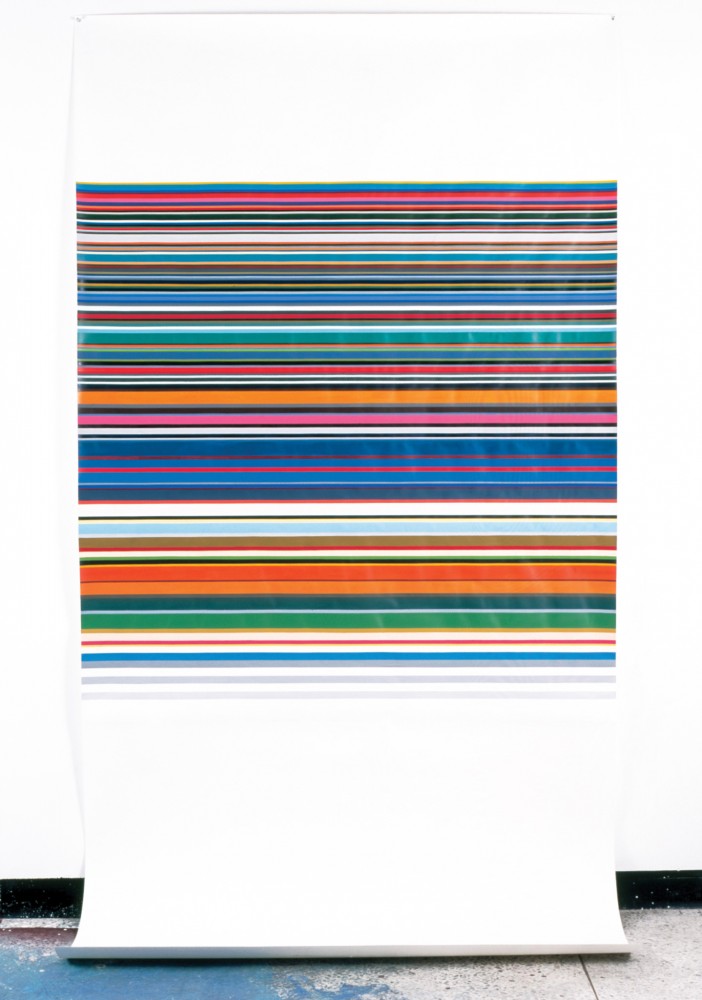
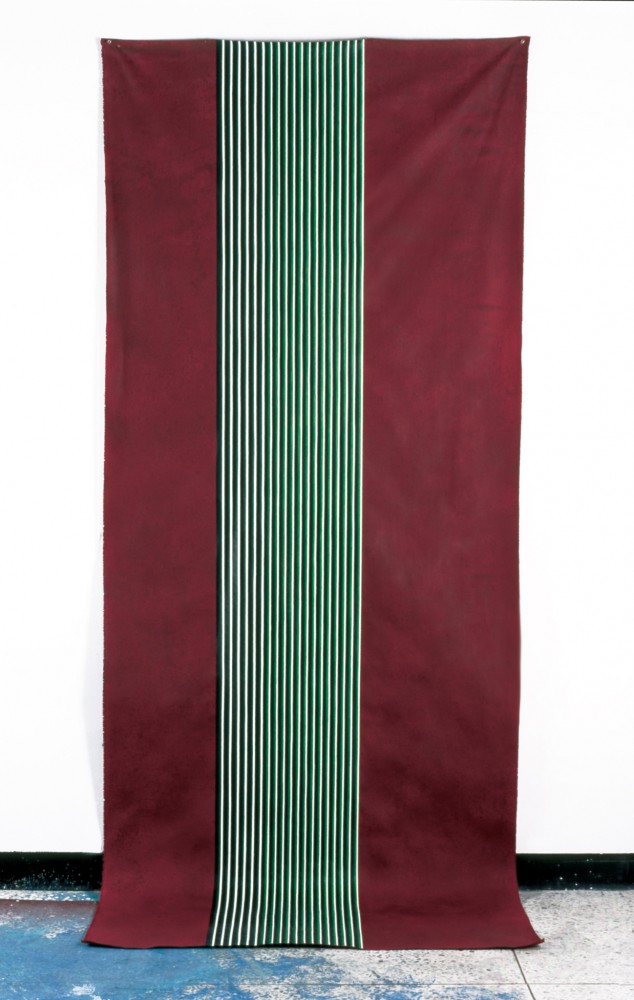
이 경의 작업에는 이처럼 환경이나 경험에 대한 예민한 감수성과, 그것을 정돈하고 해석하고 ‘평등하게’ 만들려는 역설적인 의지가 함께 들어있다. 쉽게 보면 풍경을 개념적으로 해석하거나 경험적 사실을 구조적 도표로 변환하려는 분석적 의도가 있는 것처럼 보일 수도 있지만, 사실 이경의 작업이 작용하는 곳은 전혀 다른 지점에서이다. 여기에는 감성과 이성의 관계라는 키워드보다는 오히려 혼돈과 의지의 관계라는 키워드가 필요하다. “카오스를 정돈하려는 의지”, 그것이 이 경의 작업에서 읽혀진다. 그녀의 작업이 본질적으로 기억과 관련된 것은 그 때문일 것이다. 여기서 ‘정돈’이란, 사라지고 잊혀지는 기억을 명료하게 보조하려는, 혹은 경험의 혼돈스러움을 자신이 받아들일 수 있는 좀 더 차분하고 반성적인 무엇으로 만들어 간직하려는 의지에서 나온 것으로 보인다. 그가 색채에 대한 감수성을 보여주면서도 그 색채들을 섞지 않고 독립된 영역으로 남겨두는데다 색채들 간의 경계선을 분명히 긋는데서도 이러한 점은 잘드러난다. 이러한 ‘경계선’들은, 일반적인 하드에지적인 회화와는 달리, 기계적 감수성을 표현하거나 경험을 개념화하려는 목적에서가 아니라 개별 색채들을 그 자체로 생생하게 간직하려는 목적에서 등장한 것으로 느껴진다.
그는 경험이나 감성의 혼란스러움을 극복하고 기억을 정돈하고 싶어하지만(그렇게 하고자 하는 배경에는 작가의 성격이나 경험의 특수성이 깔려있겠지만, 그 이유를 구체적으로 추적할 필요는 없을 것이다), 한편으로는 경험의 생생함이나 감각의 생기 그 자체를 상실하지 않는 한에서 그렇게 하고 싶어 한다. 통상 분류나 정돈의 수단이 아닌 색채를 통해 분류나 정돈을 하려는 노력 자체가 그런 역설적 의지의 표현일 것이다. 공존하기 어려운 것들을 공존시키려는 작가의 이 노력은 매우 난이도가 높고 리스크를 안고 있는 작업이다. 한편으로는 이러한 ‘높은 리스크’에서 나오는 긴장감이나 강렬함이 작업의 최대 매력이며, 작가가 앞으로도 계속 이끌고 나가야 하는 부분이라고 생각된다.
‘리스크가 높다’는 것은 장점이자 동시에 단점이 될 수 있다. 작업에 여러 가지 요소가 다양하게 섞여있을 경우, 하나가 부족한 부분을 다른 것들이 메꾸어줄 수가 있고, 전체적인 효과 속에서 세부적인 것이 묻혀 지나갈 수도 있다. 그러나 이경처럼 단 하나(분리된 색채들)만을 표현 매체로 선택할 경우, 오로지 그것에 승부를 걸어야 한다. 이러한 집중적인 선택은 어쩔 수 없이 리스크를 높인다. 다양한 것들을 사용하는 작가보다 더 고도의 퀄리티와 오리지날리티를 획득하지 않으면 안되는 것이다. 물론 이 어려운 길을 굳이 선택한 것 자체가 작가의 스타일이자 개성일 것이다.
이러한 어려운 선택이 성공했을 경우, 그녀의 작업은 손쉬운 연상을 거부하고 대상화와 대상화 불가능성 사이를 긴장감있게 진동하면서 보는 이를 무한한 상상과 내적 반성으로 인도하는 특이한 매력을 갖는다. 그녀의 작업은 예쁘지 않다. 보는 이의 감성에 쾌적하게 호소하지 않으며 오히려 돌연하고 생경한 느낌을 준다. 하지만 이것이 이 경 작업의 최대의 매력이다.
그런 점에서 구체적인 지명을 명시한 표제를 붙이는 것은 그다지 좋은 선택이 아니라고 생각한다. 보는 이를 너무 손쉽게 특정한 이미지로 인도하기 때문이다. 또한 이 생경함이 좀 풀어진, 상대적으로 ‘편안한’ 작업으로 갈 경우 단순한색면화로 보이게 될 위험도 있다. 정리하자면, 한편으로는, 작업을 너무 쉽게 어떤 특정한 풍경의 번역으로 만들어버릴 위험이 있고, 다른 한편으로는, 단순한 색면화처럼 보일 위험이 있다. 이 양쪽의 위험을 염두에 두면서 역설적 결합의 긴장과 간극을 최대한 유지하는 것이 성공의 관건이 아닐까 싶다.
또한 그녀의 작업에 들어있는 환경과 공간에 대한 감수성은 일반적인 색면화와 차별되는 중요한 특성 중 하나인데, 이점을 좀 더 살리는 것도 좋지 않나 싶다. 예를 들어 작업실 벽에 매일 매일 색띠 모양의 ‘출근부’를 작성했던 2001년-2002년의 ‘성실도 테스트’ 같은 작업의 경우, 매우 좋은 느낌이다. ‘경험의 생생함과 혼돈을 정돈하려는 의지’라는 키워드가 매우 명확하게 읽힐 뿐 아니라(매일 매일의 출근부라는 ‘평등한’ 그래프이면서도 동시에 그때마다 다르게 느꼈던 감성에 대한 색채의 기록이라는 점에서), 일반적인 추상화 작업이 성취하기 어려운 환경과 시간에 대한 감수성까지들어있어 높은 수준의 오리지날리티를 획득하고 있었다. 작업을 둘러싼 시간과 공간에 대한 이같은 레퍼런스를 더욱발전시켜보면 어떨까? 이 말은, 공공미술로 나가라는 것이 아니라, 작업이 시작되고 완성되고 설치되는 환경 내지 공간과 상호작용하는 작업, 혹은 그러한 과정에 소요된 시간성을 좀더 드러내는 작업을 해보면 어떨까 싶다는 의미이다. 이미 그런 요소들이 작업에 들어있기 때문에, 그것을 좀더 독특한 표현방법으로 강조하는 것도 괜찮지 않을까 싶다.
2007 © 조선령
The clue to understanding Kyong Lee’s work is the artist’s statement: “For me, painting is like defragmentation of memory.” The words ‘memory’ and ‘defragmentation’ seem to connect naturally at first glance, but they do not. Because memory is fragmentary, subjective, and always selective, it is difficult to arrange it neatly ‘like gathering disk fragments.’ To restore memory like defragmentation requires a conscious effort to fill in and regenerate the lost parts. This paradoxical combination is also found in the recent solo exhibition title ‘Equal Attraction.’ The category of ‘attraction’ cannot be ‘equal.’ Attraction is always an ‘unequal’ category that makes one choose ‘this over that.’ This ‘inequality’ is actually an essential characteristic of our memory and sensibility. Critic Kang Su-mi has described Kyong Lee’s work as ‘graphing of experience,’ but what characterizes her work is perhaps not so much the graphing of experience as the artist’s inclination not to easily choose either the ‘inequality’ of experience or the ‘equality’ of graphs. It is not that experience has been graphed, but rather one feels the vibration, tension, and gap operating between ‘experience’ and ‘graphing.’
Kyong Lee’s work thus contains both a keen sensibility toward environment and experience, and a paradoxical will to organize, interpret, and make them ‘equal.’ On the surface, it may seem as if there is an analytical intention to conceptually interpret landscape or convert experiential facts into structural diagrams, but in fact, Kyong Lee’s work operates at an entirely different point. Here, rather than the keyword of the relationship between sensibility and reason, the keyword of the relationship between chaos and will is needed. “The will to organize chaos”—this is what is read in Kyong Lee’s work. Her work is essentially related to memory perhaps for this reason. Here, ‘organization’ seems to come from the will to clearly assist disappearing and forgotten memory, or to transform the chaos of experience into something calmer and more reflective that she can accept and preserve. This is well revealed in the fact that while she shows sensitivity to color, she does not mix these colors but leaves them as independent domains and clearly draws boundary lines between colors. These ‘boundary lines,’ unlike general hard-edge painting, feel as though they emerged not to express mechanical sensibility or conceptualize experience, but to vividly preserve individual colors as they are.
She wants to overcome the confusion of experience or emotion and organize memory (although the artist’s personality or specificity of experience underlies the desire to do so, there may be no need to specifically track the reasons), but on the other hand, she wants to do so only insofar as she does not lose the vividness of experience or the vitality of sensation itself. The very effort to classify or organize through color, which is not usually a means of classification or organization, would be an expression of such paradoxical will. This effort by the artist to coexist things that are difficult to coexist is highly difficult work carrying risk. On one hand, the tension or intensity arising from this ‘high risk’ is the greatest attraction of the work, and I think it is a part the artist should continue to pursue in the future.
‘High risk’ can be both an advantage and a disadvantage. When various elements are mixed in the work, one thing can fill in where another is lacking, and details can be buried and overlooked in the overall effect. However, when choosing only one thing (separated colors) as the medium of expression like Kyong Lee, one must stake everything on it. This concentrated choice inevitably increases risk. One must achieve a higher level of quality and originality than artists who use various things. Of course, choosing this difficult path itself would be the artist’s style and personality. When this difficult choice succeeds, her work has the unique charm of refusing easy association, tensely vibrating between objectification and impossibility of objectification, and leading the viewer to infinite imagination and inner reflection. Her work is not pretty. It does not appeal pleasantly to the viewer’s sensibility but rather gives a sudden and unfamiliar feeling. But this is the greatest charm of Kyong Lee’s work.
In that sense, I think attaching titles that specify concrete place names is not a very good choice. This is because it leads the viewer too easily to a specific image. Also, if she moves toward relatively ‘comfortable’ work where this unfamiliarity is somewhat loosened, there is a risk that it will appear as simple color field painting. To summarize, on one hand, there is a risk of making the work too easily into a translation of some specific landscape, and on the other hand, there is a risk of it appearing like simple color field painting. I think the key to success is to maintain the tension and gap of paradoxical combination as much as possible while keeping both of these dangers in mind.
Also, the sensibility toward environment and space contained in her work is one of the important characteristics that differentiates it from general color field painting, and I think it would be good to develop this point further. For example, in the case of the 2001-2002 ‘Diligence Test’ work where she created an ‘attendance record’ in the form of color bands on the studio wall every day, the feeling is very good. Not only is the keyword ‘vividness and chaos of experience and the will to organize it’ very clearly readable (in that it is an ‘equal’ graph as a daily attendance record while simultaneously being a record of colors for the emotions felt differently each time), but it also contained a sensibility toward environment and time that general abstract painting work finds difficult to achieve, thus acquiring a high level of originality. How about further developing such references to time and space surrounding the work? This does not mean to move toward public art, but rather to work that interacts with the environment or space where the work begins, is completed, and is installed, or to create work that reveals more of the temporality spent in such processes. Since such elements are already in the work, I think it might be good to emphasize them with more unique methods of expression.
2007 © Cho Sun-ryoung